Pokazywanie postów oznaczonych etykietą PYRA DOROTA. Pokaż wszystkie posty

4.06.2012

A child is a real cosmos | Dziecko to prawdziwy kosmos


In the beginner's mind there are many possibilities, in the expert's mind there are few.
Shunryu Suzuki

(trans. by myself)


Dorota Pyra
DailyHaiga - 02.06.2012 
Dorota Pyra's blog: rozsypany-czas 

A child is indeed a real cosmos (vide: Dorota Pyra's astonishing haiga).
And its imaginationa planet not discovered to the end, which attracts ideas straight from its childish knowledge.


patyk i kamień
dzisiaj znów moje dziecko
stwarza świat

stick and stone
today my child again
creates a world


The hero of Dorota's lovely haikuTHE CHILDplaying with things already well known in prehistory (a stick and pebble) is able to create on the sand or on a small piece of ground ITS OWN WORLD.
It is the world perhaps even without adjectives; it is still the world of chaotic lines and geometric shapes, but also it is the world in which a stick changes into a magic wand, and the child becomes a magician of possibilities.

From the point of view of child (as well as of an adult) the world seems to be an eternity, which he/she experiences every moment, and which the child sees during encounter with the rule of chaos constantly modified by childish possibilities in the course of its daily play.

It is just in it that the seed of the art lies.

Dziecko to prawdziwy kosmos | A child is a real cosmos


English Version: A child is a real cosmos


W umyśle początkującego jest wiele możliwości, u eksperta jedynie kilka.
Shunryu Suzuki
(tł. L.Sz.)


Dorota Pyra
DailyHaiga - 02.06.2012 
Dorota Pyra's blog: rozsypany-czas 


Dziecko to rzeczywiście prawdziwy kosmos (vide: niesamowita haiga Doroty).
A jego wyobraźnia - nieodkrytą do końca planetą przyciągająca pomysły prosto z dziecięcej wiedzy.


patyk i kamień
dzisiaj znów moje dziecko
stwarza świat


stick and stone
today my child again
creates a world


Bohater wspaniałego haiku Doroty - DZIECKO - z zabawy przedmiotami dostępnymi już w prehistorii (kamień i patyk) potrafi wykreować na piasku, na kawałku ziemi, SWÓJ ŚWIAT.

To świat być może nawet jeszcze i bez przymiotników; to jeszcze świat chaotycznych linii i geometrycznych kształtów, ale to świat, w którym patyk staje się czarodziejską różdżką, a dziecko - magiem możliwości.

Z perspektywy dziecka (jak też i dorosłego) świat wydaje się być wiecznością, którą doświadcza co chwilę, i którą zaznaje podczas spotkania zasady chaosu nieustannie modyfikowaną dziecięcymi możliwościami w trakcie codziennej zabawy.

To właśnie w niej tkwi zalążek sztuki.

14.03.2012

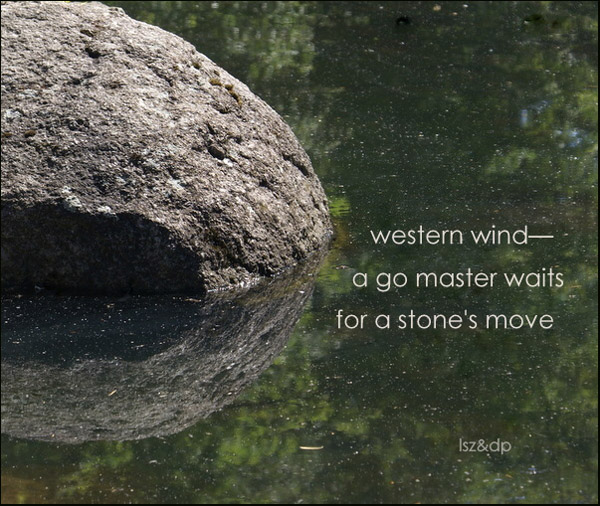
Daily Haiga - Dorota Pyra's haiga with western wind | haiga Doroty Pyry z zachodnim wiatrem

Wyjątkowa - jak dla mnie - haiga Doroty Pyry ukazała się dzisiaj w Daily Haiga:
So special, as for me, Dorota Pyra's haiga appeared today in the Daily Haiga:


Leszek Szeglowski (Poet)

14 March 2012
---
Poem Text or Excerpt:
western wind—
a go master waits
for a stone’s move

zachodni wiatr –
mistrz go czeka

na ruch kamienia

Creator:
Publication Notes:
The haiku won Honorable Mention in the 15th Mainichi Haiku Contest 2011.


Obraz nie ilustrując narzucającego się odczytania haiku dodaje nową warstwę interpretacji.

Her image not illustrating imposed reading of the haiku, adds a new layer of interpretation.

19.09.2011

Results of The 9th International Haiku Contest in Italian language 2011 - Cascina Macondo


Znane są już wyniki 9. Międzynarodowego Konkursu Haiku w języku włoskim.

Dyplom i publikacja w pokonkursowej antologii to nagroda za IV miejsce, którą zdobyła Dorota Pyra ex aequo wraz z sześcioma innymi uczestnikami konkursu.


The results of The 9th International Haiku Contest in Italian language are  already known.

The award for IV place is a certificat and publication in a post-contest anthology, which was gained by Dorota Pyra, ex aequo with six other participants.


stella cadente –
prima goccia di latte
dal mio seno

(trans. Dorota Pyra)

spadająca gwiazda –
pierwsza kropla mleka
z mojej piersi


shooting star
the first drop of milk
from my breast

(trans. Antonella Filippi & myself - both autonomous translations) 

CASCINA MACONDO CONCORSO INTERNAZIONALE HAIKU IN LINGUA ITALIANA 9° EDIZIONE 2011  
QUARTI CLASSIFICATI PARI MERITO - PREMIO - antologia QUESTO FILO DI VOCE con i 114 haiku selezionati al concorso - attestato di merito

28.07.2011

DREAM OF JAPAN - photo exhibition

English version
The Polish version in previous post


The Henryk Wieniawski Philharmonic in Lublin

and

The Informal Open Group of Friends and Lovers
of the Far East Culture and Art

photo exibition:

Dream of Japan

Honorary Patronage of the exibition:


The Embassy of Japan in Poland


Philharmonic Hall Foyer
26 August 2011, 7:00 p.m.
16 September 2011, 7:00 p.m.
The H. Wieniawski Philharmonic in Lublin, 5 Maria Curie-Skłodowska St.,
20-029 Lublin


Japan from the borderline of waking and dream is a run of Agnieszka Łoboda’s paintings. An oneiric mood is dominant and prevails in these works. Implied space in her art refers to dream visions, and the author places in it the various figures with their symbolic ambiguities, understatements, and open composition.


Samurais and Demon-Geisha is a series of photographs, taken by Rafał Stęgierski, that is inspired by the Japanese legend on Prince Hizen, his favourite consort O Toyo, and a warrior namad Itô Sôda. Here, again, the reality takes the shape of a dream, but in this case the dream turns out to be a nightmare. In this conventional space, the cause-effect connections and logical aftermaths of events get blurred.


Magic garden … in the Japanese style is a cycle of photographs in which realism is blended with magic. The author of photos, Artur Łazarz, draws on the imagination and refers to myths and childhood fairy tales, yet he tells the story of his own. There is a very distinct topos of garden here which is presented in a literal and a metaphorical way as well as in a metaphysical manner. In front of viewer an unknown space opens up, but a space full of harmony… well, who knows if it really happened?

magic garden…
on the other side of the mirror
dreams dwell


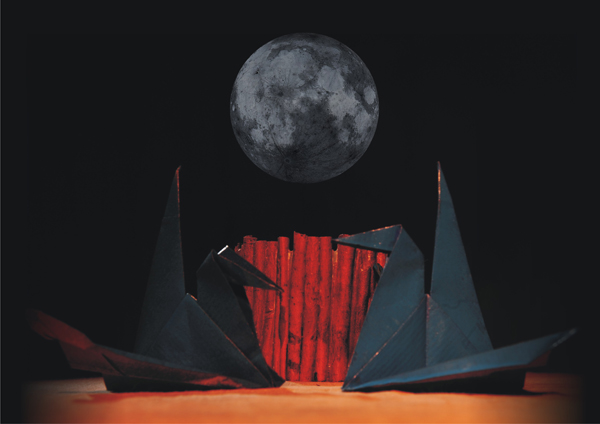
The collection of photo-haiga (haisha) is a space in which the magic of word is connected and mixed with the magic of image. All haiku of Dorota Pyra’s authorship. The origami photos taken by Artur Łazarz. Translations of Polish haiku into Japanese by Radosław Bolałek and Matayoshi Haraguchi. The graphic design of the whole series made by Agnieszka Łoboda. Translation into English: Lech Szeglowski.

a dry twig
after the flight of sparrows
still again


The Informal Open Group of Friends and Lovers of the Far East Culture and Art assembles people who share the ideal of active and creative lifestyle, and by having capacity for the uninhibited expressing of thoughts and ideas, they develop their own passions and special interests. Their creative works, marked with imagination and inspired by Oriental art, are oriented toward people open to an unclassical and unconventional attitude towards the fascinating art and culture of Japan and Far East.

Dorota Pyra – a preschool teacher and artist by education living in Gdańsk. She writes haiku and creates photo-haiga (haisha) by combining a word with a picture. Her haiku could be found on the Polish and foreign websites, but also in some paper publications. In 2009 she won the Grand Prize in The Shiki Special Kukai in memory of William J. Higginson – the seventh haiku contest to be held and sponsored by the Ehime Culture Foundation in Japan. The same year, her first book of haiku and free poems entitled “Icy Moon” was out (Bernardinum Press, Pelplin, 2009). A member of The Informal Group since May 2009.

Lech Szeglowski – studied literature and speech therapy and thus betraying his another passion – mathematics. He’s been writing for many years, himself calling this “a noting”. In the spare time he enjoys translating his friend’s haiku into English. However, his ties with haiku is connected, first of all, with the theory of this Japanese poetic genre. At the end of 2010 he started realization of the project “Haiku Directory” – an extensive haiku bibliography. He joined The Informal Group in October 2010, but the beginning of co-operation dated back to August 2009.

Agnieszka Łoboda – a computer graphic artist not only by profession but also by fondness. She does commercial graphics, graphic design as well as web design, and provides services for small polygraphy. The culture and art of Japan lie in the sphere of her keen interest. She is the author of numerous graphic arts and photo-haiga (haisha). A member of The Informal Group since March 2008.

Rafał Stęgierski – a lecturer at The Maria Curie-Skłodowska University of Lublin, a computer scientist and photograph aficionado; being an enthusiast of The Early Middle Ages, shows a lively interest in the customs of the Slavic people and Vikings. He maintains a blog devoted to photography mainly concerned with its technical aspect of issues in this medium. Fascinated with the Far East culture and art. A member of The Informal Group since June 2009.

Artur Łazarz – lives and works in Kraśnik. The artistic photography and computer graphics are in his area of strong interest. He creates artwork inspired by Japan, surrealism, and magic realism. In 2008 he founded The Informal Open Group of Friends and Lovers of the Far East Culture and Art. He’s responsible for all presented content and directions for further development of the group. All of its projects and activities are coordinated and funded by himself as well.

(Text's author: Artur Łazarz)
(trans. L. Szeglowski)

27.07.2011

SEN O JAPONI - wystawa fotografii

Wersja w j. polskim
The English version  in next post


Filharmonia im. Henryka Wieniawskiego w Lublinie

oraz

Nieformalna Otwarta Grupa Przyjaciół i Miłośników
Kultury i Sztuki Dalekiego Wschodu

wystawa fotografii:

Sen o Japonii

Honorowy patronat nad wystawą

 
Ambasada Japonii w Polsce  


Foyer Filharmonii
26 VIII 2011r.godz. 19.00
16 IX 2011r.godz. 19.00
Filharmonia im. H. Wieniawskiego w Lublinie ul. Marii Curie-Skłodowskiej 5,
20-029 Lublin


Japonia z pogranicza jawy i snu, to seria obrazów Agnieszki Łobody. W pracach dominuje oniryzm. Przestrzeń nawiązuje do wizji sennych, a autorka umieszcza w niej różne figury z ich symbolicznymi wieloznacznościami, niedopowiedzeniami i otwartą kompozycją.


Samuraje i Gejsza-Demon, to seria fotografii Rafała Stęgierskiego, inspirowana japońską legendą o księciu Hizen, jego wybrance O Toyo i wojowniku Itô Sôda. Ponownie rzeczywistość ma kształt snu, tym razem sen jest koszmarem. W tej umownej przestrzeni zacierają się związki przyczynowo-skutkowe i logiczne następstwa wydarzeń.


Zaczarowany ogród … w stylu japońskim, to cykl fotografii na których realizm miesza się z magią. Autor fotografii – Artur Łazarz, odwołuje się do wyobraźni, nawiązuje do mitów i bajek z dzieciństwa ale opowiada już własną historię. Bardzo wyraźny jest tu topos ogrodu przedstawiony w sposób i dosłowny i przenośny i metafizyczny. Przed widzem otwiera się przestrzeń nieznana ale pełna harmonii … tylko kto wie czy to zdarzyło się naprawdę?


zaczarowany ogród...
po drugiej stronie lustra
mieszkają sny


Seria foto-haiga, to przestrzeń w której magia słowa łączy się i miesza z magią obrazu. Autorką wierszy haiku jest Dorota Pyra. Fotografie origami wykonał Artur Łazarz. Tłumaczenie haiku na język japoński: Radosław Bolałek i Matayoshi Haraguchi. Opracowanie graficzne całej serii jest dziełem Agnieszki Łobody. Tłumaczenia haiku na język angielski: Lech Szeglowski.

sucha gałązka
po odfrunięciu wróbli
znów nieruchoma


Nieformalna Otwarta Grupa Przyjaciół i Miłośników Kultury i Sztuki Dalekiego Wschodu skupia ludzi, którzy preferują aktywny i twórczy styl życia, rozwijają swoje pasje i zainteresowania, tworzą sztukę inspirowaną Dalekim Wschodem. Posiadają umiejętność swobodnego wyrażania własnych myśli i idei. Ich twórczość nacechowana jest wyobraźnią. Swoje prace adresują do ludzi otwartych na nieklasyczne i niekonwencjonalne podejście do fascynującej kultury i sztuki Japonii i Dalekiego Wschodu.

Dorota Pyraz wykształcenia nauczycielka przedszkola i plastyczka; mieszka w Gdańsku. Pisze haiku, oraz tworzy foto-haiga, łącząc haiku z obrazem fotograficznym. Jej utwory można znaleźć na polskich i zagranicznych stronach internetowych, jak i w wydawnictwach papierowych. W 2009r. zdobyła główną nagrodę - grand prix na prestiżowym konkursie haiku The 2009 Shiki Special Kukai Contest w Japonii. W tym samym roku opublikowała swój pierwszy tomik poezji "Lodowy księżyc". W Nieformalnej Otwartej Grupie Przyjaciół i Miłośników Kultury i Sztuki Dalekiego Wschodu od maja 2009r.


Lech Szeglowskistudiował filologię polską i logopedię, tym samym zdradzając swoją inną pasję - matematykę. Od wielu lat pisze, sam nazywając to notowaniem. W wolnych chwilach tłumaczy haiku przyjaciół i znajomych na j. angielski. Jednakże jego zainteresowanie haiku wiążę się przede wszystkim z teorią tego japońskiego gatunku poetyckiego. Pod koniec 2010 r. rozpoczął realizację projektu "Haiku Directory"- obszerną bibliografię haiku. Dołączył do Grupy w październiku 2010 r. ale początki współpracy datuje się na sierpień 2009 r.

Agnieszka Łoboda z zawodu i z zamiłowania grafik komputerowy. Zajmuje się grafiką użytkową, grafiką stron WWW i przygotowaniem materiałów dla małej poligrafii. Interesuje się kulturą i sztuką Japonii. Jest autorką licznych grafik i serii foto-haiga. W Nieformalnej Otwartej Grupie Przyjaciół i Miłośników Kultury i Sztuki Dalekiego Wschodu od marca 2008r.

Rafał Stęgierskiwykładowca UMCS w Lublinie, informatyk, pasjonat fotografii, interesuje się historią okresu wczesnego średniowiecza, głównie zwyczajami Słowian i Wikingów. Pisze blog poświęcony fotografii, przede wszystkim technicznej stronie tego medium. Fascynuje się kulturą i sztuką Dalekiego Wschodu. W Nieformalnej Otwartej Grupie Przyjaciół i Miłośników Kultury i Sztuki Dalekiego Wschodu od czerwca 2009r.

Artur Łazarzmieszka i pracuje w Kraśniku. Interesuje się fotografią artystyczną i grafiką komputerową. Tworzy obrazy inspirowane Japonią, surrealizmem i realizmem magicznym. W 2008 r. założył Nieformalną Otwartą Grupę Przyjaciół i Miłośników Kultury i Sztuki Dalekiego Wschodu. Odpowiada za prezentowane treści i kierunki dalszego rozwoju oraz koordynuje i finansuje prace Grupy.

(Autor tekstu: Artur Łazarz)

18.03.2011

Kiedy niebo zaszło nocą | When the sky went with night - Dorota Pyra

Kiedy niebo zaszło nocą
schowałam się pod deszczem
światła starej latarni

teraz każdą kroplą odliczam
ile mnie jeszcze zostało

Dorota Pyra

When the sky overgrew with night
I hid myself under the rain
of light of the old lamppost

now with each drop I'm counting
how much of me still remained


(trans. L.Sz.)


Pierwszy wers mógłby wygladać inaczej:

When the sky went with night


Wiersz Kiedy niebo zaszło nocą | When the sky went with night (Dorota's blog: rozsypany-czas "zawarty jest w tomiku "Nie czekaj na mnie" ("Don't wait for me"), który został wydany przez wydawnictwo "Ars pro Memoria" (Starachowice 2011). Publikacja jest dwujęzyczna (po polsku i po niemiecku) i wchodzi w skład serii "Trzy wiersze". Autorką tłumaczeń na j. niemiecki jest Małgorzata Płoszewska."

The poem "Kiedy niebo zaszlo nocą" | "When the sky went with night" is included in Dorota Pyra's  new bi-language Polish/German poetic booklet "Nie czekaj na mnie" | "Don't wait for me" (ARS pro MEMORIA, Starachowice 2011) which belongs to the project "Three poems". The author of German translation is Małgorzata Płoszewska.

29.01.2011

Haikuworld January 2011 | Styczeń 2011

Styczniowe Shiki Monthly z polskim akcentem: 
Dorotka "bez słów" osiąga podium.

Temat: Loss (strata) 
Second Place - 19 Point

frozen river -
she keeps silent
about her past

Dorota Pyra
(0,4,11) = 19 pts 


** 'frozen river' is evocative of the state of a long ago loss as in 'frozen in time'.
**a very strong statement. No way to unfreeze this one.


Dwa powyższe komentarze mówią za siebie.
Gratulacje!

Po polsku:

zamarznięta rzeka -
ona milczy
o swojej przeszłości


Moje haiku jedynie temperaturą zbliżyło się do wiersza Dorotki:

Kigo: świt

dawn at her place
her magnetic heart
on the icebox


(0,1,4) = 6 pts 

świt u niej
jej magnetyczne serce
na lodówce 

Temat: Loss (strata) 

falling cherry petals -
the black hearse leaving
a little lighter 


(0,0,6) = 6 pts 

opadające płatki wiśni -
czarny karawan odjeżdża
jaśniejszy

8.01.2011

Kto by pomyślał... | Who would have guessed...

Kto by pomyślał...
 

kto by pomyślał
pół wieku temu
że wciąż będą razem

dom z przygarbionym dachem
przy ślepej uliczce

Dorota Pyra

Who would have guessed…

who would have guessed
half century ago
that they’d be still together

the house with its stooping roof
at the dead end
 

(trans. L.Sz.)

7.01.2011

Stara fotografia | The old photo by Dorota Pyra

STARA FOTOGRAFIA
 

na pierwszym planie
dziewczynka - to ja
obok - mój ojciec
podtrzymuje rower
gdy próbuję wyjechać
z pogniecionego podwórka...
 

na pierwszym planie
mój ojciec
obok - ja 


Dorota Pyra


The old photo

in the foreground
there is a girl – it’s me
nearby – my father
supporting the bicycle
when I’m trying to leave
the crumpled back yard...

in the foreground
there is my father
nearby – me
 

(transl. L. Sz.)

9.11.2010

Przepiękna "młoda wdowa" i "rodzinna wioska" - tajemnicze haiku | The marvelous-looking "young widow" and "home viillage" - mysterious haiku.

Na stronce UYIRMMAI — jest to prawdopodobnie jakiś rodzaj magazynu, jedyną
bowiem dostępną informacją w j. angielskim jest adres edytora (1/29 Subramaniyan street, Abiramapuram, Chennai-600018; Tamil nadu, India;
editor@uyirmmai.com) — ukazały się Doroty (uyirmmai) i moje (uyirmmai)
haiku, oba o świetlikach. Wyglądają w języku tamilskim, bo o przeczytaniu nie
może być mowy, niesamowicie.

At UYIRMMAI website — it seems to be some kind of magazine, but the only info
available in English is the editor’s address (1/29 Subramaniyan street,
Abiramapuram, Chennai-600018; Tamil nadu, India; editor@uyirmmai.com) —
there’s Dorota’s (uyirmmai) and my (uyirmmai) haiku, both about the fireflies.
They look in tamil — cos reading them is no option to me — stunningly. 


அவள் கையில் மின்மினி 
இளம் விதவையின் மோதிரத்தின் 
குளிர் தழலொளி 

டோரோடா பைரா 
Dorota Pyra 

firefly on her hand
the cold glow
of young widow's ring 


świetlik na dłoni
chłodny blask obrączki
młodej wdowy


i moje:

சொந்தக் கிராமம் 
ஆழ்கிணறுக்கு மேல்
ஒரு மின்மினி 

லெக் செக்ளோவஸ்கி 
Lech Szeglowski 

home village
above the deep well
a firefly

rodzinna wioska
nad głęboką studnią
świetlik
Haikuworld - July 2008 Kukai (Kigo Theme: Firefly)


2.11.2010

The Vancouver Cherry Blossom Festival 2010 — rezultaty

Dzisiaj na stronie The Vancouver Cherry Blossom Festival ogłoszono wyniki 2010 Vancouver Cherry Blossom Festival Haiku Invitational.

Tegorocznym jurorem konkursu był Michael Dylan Welch, jeden z najbardziej znanych twórców haiku, współzałożyciel American Haiku Archives, a także twórca Tanka Society of America, kilkukroktny vice-prezes Haiku Society of America, członek zarządu Washington Poets Association, edytor haikowego periodyku "Tundra".


W kategorii International najlepszym haiku okazało się polskie:

cherry trees in bloom— 

if only I could stop 
the wind
 

Łukasz Garczewski, Poznań, Poland


Ogromne gratulacje dla zwycięzcy. 
Rzeczywiście urzekające, godne takiej nagrody, haiku.


W kategorii International 13 utworów (2 polskie haiku) zdobyło Sakura Award: 

cherry blossom tattoo
she shows him 
the hidden branch

Maria Kowal-Tomczak, Opole, Poland


blossoming cherries—  
faced to the window 
an empty chair  

kwitnące wiśnie —
zwrócone w stronę okna
puste krzesło 

Dorota Pyra, Gdańsk, Poland


W kategorii International Honorable Mention  otrzymało 51 haiku (9 poskich):

may morning  
cherry twigs on the grave 
of a young girl

Andrzej Dembończyk, Zbrosławice, Poland


spring slips away  
cherry petals 
on the hearse 

Artur Lewandowski, Sieradz, Poland


cherry blossoms—  
repainting my kitchen 
pink

Jacek Margolak, Kielce, Poland 


urban boulevard  
in a beggar’s hat 
cherry petals

Robert Nowak, Wałbrzych, Poland 


a game of chess  
on the bald spots of old men 
cherry petals

Robert Nowak, Wałbrzych, Poland  


a kid in combat trousers  
every pocket 
full of cherry petals 

chłopczyk w bojówkach —
wszystkie kieszenie pełne
płatków wiśni

Dorota Pyra Gdańsk, Poland


cherry tree flower  
washed away with rain 
again in the sunshine

Karol Rosiak, Bydgoszcz, Poland


creaking rocking chair—  
the old cherry tree again 
in bloom 

skrzypiący bujany fotel —
znowu stara wiśnia
w rozkwicie 

Lech Szeglowski, Gdańsk, Poland


cherry blossoms  
on the last page— 
diary of a veteran

Urszula Wielanowska, Kielce, Poland


Nagrodzonym autorom - serdeczne gratulacje.


W kategorii Youth Sakura Award otrzymało haiku: 

my sad eyes  
under a cherry tree
lots of petals

Karolina Rosiak, age 10 Bydgoszcz, Poland


a Honorable Mention: 

a cherry tree  
how beautifully it blossoms 
day by day

Karolina Rosiak, age 10 Bydgoszcz, Poland


Brawo Karolina!